Business Name: Manning Detail & Coatings
Address: 1812 W Sunset Blvd #30, St. George, UT 84770
Phone: (435) 572-0451
Manning Detail & Coatings
Manning Detail & Coatings is a mobile detailing and ceramic coating outfit that offers a shop, specializing in paint correction and ceramic coatings.
1812 W Sunset Blvd #30, St. George, UT 84770
Business Hours
Monday thru Sunday: 9:00am - 6:00pm
Facebook: https://www.facebook.com/manningdetail.coatings/ Instagram: https://www.instagram.com/manningdetailandcoatings/ YouTube: https://www.youtube.com/@manningdetailandcoatings
Detailers yap about gloss, but the shine you see in images comes from 2 various things operating in series. Initially, you level the paint to eliminate problems. Then, you lock that surface under a durable, chemical-resistant layer that enhances depth and makes maintenance simpler. That stacked procedure, paint correction followed by ceramic coating, is the backbone of premium car detailing. Done right, it alters how the vehicle looks on the first day and how it ages over the next several years.
I have actually remedied and covered whatever from daily-driven hatchbacks to black show cars and industrial fleets. The common thread is easy: when the surface under the covering is truly fine-tuned, every quality the coating promotes hydrophobics, gloss, slickness multiplies. When the underlying paint stays swirled or hazy, the covering just preserves a mediocre finish. The difference shows most under gasoline station lights in the evening or in direct sun after a wash. That is where an appropriate stack spends for itself.
What paint correction actually does
Paint correction is selective abrasion. You get rid of a regulated amount of clear coat to level the topography around scratches, etch marks, and oxidation. Leveling is the keyword. A scratch is a tiny valley; to make it vanish optically, you shave down the surrounding peaks. The less aggressive the defect, the less product you need to remove. On modern cars, functional clear coat thickness typically varies from 70 to 150 microns total, with just a fraction you want to touch. If a panel measures 110 microns, you may eliminate 2 to 5 microns throughout a careful one-step correction. Deep problems that catch a fingernail can need more cut than is prudent, which is why judgment matters more than products.
Correction begins with examination. Great light exposes the story: rotary holograms from a previous enthusiast task, tight pinstriping of automated wash swirls, random separated deep scratches near deals with, etch rings from bird droppings baked in a weekend sun. A paint depth gauge assists map panels that have thinner clear or where a re-spray conceals under the surface. When I see extremely irregular readings, I set various expectations and choose softer pads and slower cut rates.
Tool choice depends upon goals and paint type. A long-throw dual-action polisher with a microfiber cutting pad and decreasing substance corrects quicker on medium to difficult paints like German finishes. On soft or finicky Japanese clear, a foam pad with a fine polish lowers the risk of haze and micromarring. You can finish an everyday driver in a single action that gets rid of 50 to 70 percent of defects while bumping gloss considerably. Program builds that need near-perfection need numerous phases cutting, refining, then jeweling with ultra-fine polish on a completing pad to punch clarity.
The final stage before ceramic coating is a proper panel wipe with an IPA-based solvent or the coating maker's prep service. This removes any polishing oils that might obstruct bonding. Skipping this action leads to finishing high spots, patchy curing, or premature failure. The paint must look surgically clean, crisp, and uniform in surface from every angle before the finishing touches it.
Why ceramic coating considerably increases the results
A ceramic coating does 2 jobs at once. It adds a transparent, tough, chemically resistant sacrificial layer on top of the remedied paint, and it customizes surface area energy. That modified surface area energy is what you see as water beading and sheeting. Dirt sticks less, and weekly washes end up being quicker. On the protection front, finishing chemistry withstands UV, strong cleaning agents, road salt, brake dust corrosion, and light abrasion from windborne dust.
Not all coverings are produced equal. Consumer-level ceramics you can apply in your home normally cure softer and last 1 to 2 years. Professional-only formulas crosslink more difficult and bond more securely, which equates into more robust chemical resistance and longevity in the 3 to 5 year range when maintained properly. The most noticeable difference for owners is less regular decontamination needed, more constant beading after months of abuse, and a more noticable candy-gloss on black and dark colors.
But here is the catch: finishings have a tendency to lock in whatever is below them. If the paint reveals compounding haze or remaining swirls, the covering will make those flaws look much deeper because it increases clearness. Think of it like a glass of water over scratched paper. The water hides dust but makes ridges more visible. That is why stacking works only when both actions are performed with care. You remedy to the level your budget plan and paint density enable, then you coat to protect and enhance.
A mobile detail situation that highlights the stack
Last summer season, a client with a metal blue SUV reserved a mobile detail with a request for a ceramic coating. The paint looked dull under shade however blew up with holograms under a swirl finder. It had actually been dealer-prepped with a rotary and a wool pad, then wiped down with some gloss enhancer. We measured the hood and discovered readings from 100 to 112 microns, panels in the 95 to 105 variety. Safe to correct.
After an extensive wash, iron decon, and clay mitt pass, we tried a test spot with a microfiber cutting pad and a medium cut substance, then fine-tuned with a completing polish on foam. The two-step gotten rid of roughly 80 percent of flaws, and the metallic flake finally popped. We wiped the panels two times with a panel preparation, used a pro-grade ceramic coating in sections, leveled it within the defined window, and utilized regulated infrared heat to speed initial remedy due to the fact that humidity increased late afternoon.
Two things stuck out when we provided the vehicle. First, the owner noticed the door denting scratches were lighter but not gone. We had actually flagged those as unfathomable to go after without running the risk of clear coat. Second, he called 3 months later on after a mountain trip. The layered sections washed clean with a pressure wash, while the uncoated roofing system rail plastic still needed agitation. The stack provided a much better preliminary appearance and a measurable decrease in maintenance effort.
The economics of stacking versus piecemeal services
From a customer's lens, car detailing typically feels like a menu of add-ons. Wash, interior, clay, wax, ceramic coating, headlight bring back, the list goes on. Bundling paint correction with ceramic coating is not just an upsell. It is effective. If I am currently taping trim, masking badges, and polishing for numerous hours, the incremental expense to coat right after is lower than arranging a different covering go to later on. The surface is fresh, tidy, and oil-free. You conserve prep time, and the covering sets on a newly leveled surface area, which extends its helpful life.
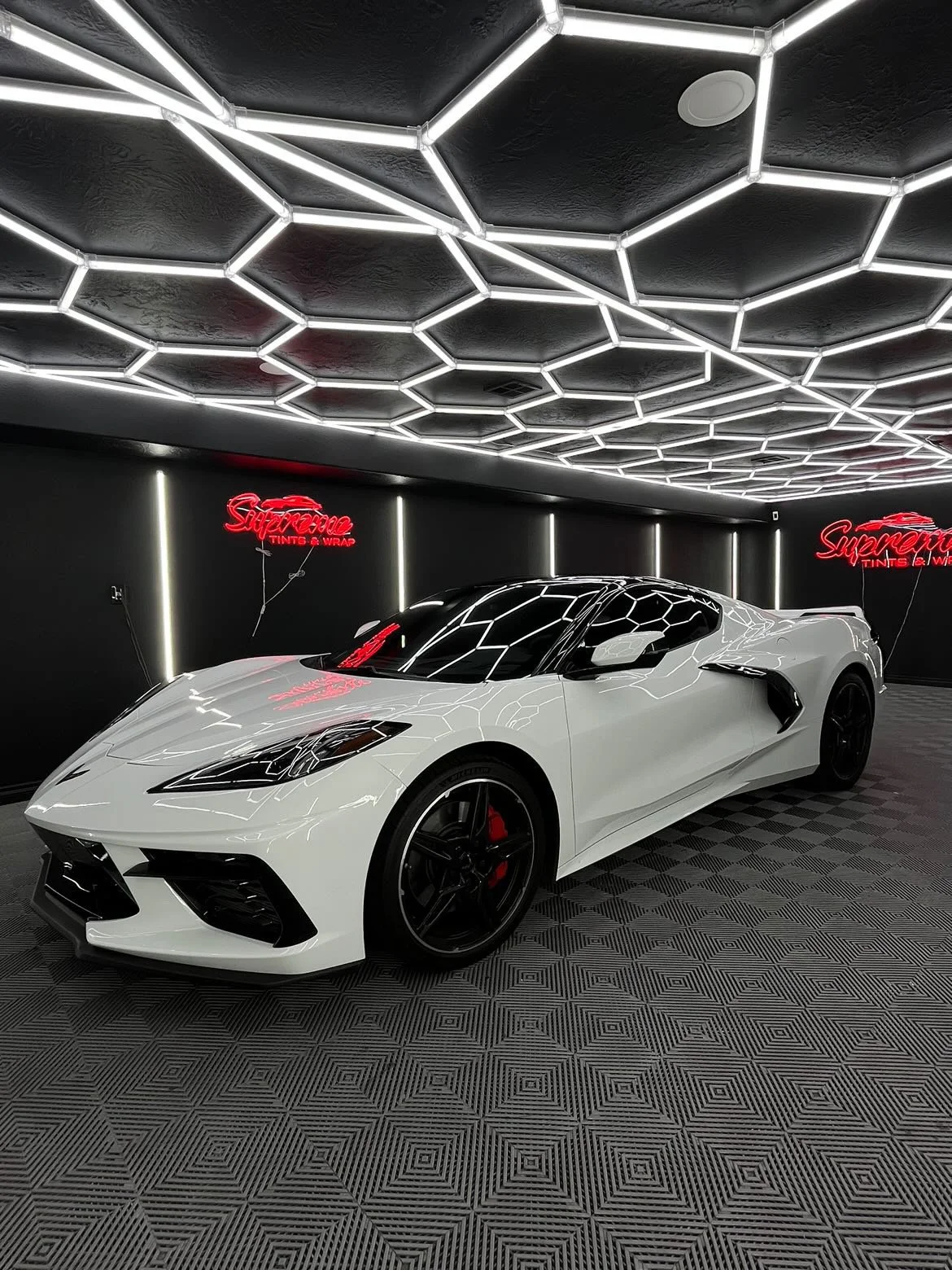
On the flip side, applying a finish over uncorrected paint can make good sense on work trucks or white fleet vans where looks are secondary, but fast washing matters. Those customers choose an one-year coating after a decon-only preparation. They accept the preserved problems in exchange for reduced wash time and much easier bug elimination. The economics change when resale value or brand image matters. A black executive sedan or a high-end cars advantages most from the complete stack because the improvement in gloss and clarity is visible and long lasting, and appraisal values reflect the condition.

What takes place to problems after the stack
Think of 4 common flaw classifications and how they respond.
Swirls and holograms come from incorrect wash tools and aggressive rotary buffing. Correction removes them. The finishing then resists micro-marring because its slick surface and increased firmness reduce friction during cleaning. You still require excellent wash strategy, but defects return more slowly.
Waterspots and etching can imprint into clear coat if minerals or bird droppings sit under heat. Polishing eliminates the etch if it is shallow. The covering lets water launch faster and offers a chemically resistant buffer that buys time, particularly in areas with difficult water or near the ocean.
Oxidation dulls single-stage paints and can haze clear coats. Correction restores clarity and depth, particularly on reds and blacks that fade much faster. The coating slows oxidation by blocking UV better than wax or sealants.
Light scratches from door manages, sleeves, or drying towels get visually decreased when correction levels the surrounding paint. The coating no, it does not fill deep scratches permanently but it can mask the very finest hairlines and improve overall contrast. You will still see deep damage under a flashlight, yet the cars and truck looks richer in regular light.
Why prep quality decides finish longevity
Many owners ask the length of time a ceramic coating lasts. The truthful answer is a range, plus a caution about upkeep. A three-year pro coating can look tired in 18 months if the paint was not fully removed of oils, the base surfaces were polluted, or the wash regimen is harsh. Alternatively, a consumer coating can run strong for two years with good preparation and mild washes.
The actions that matter most before the application are mechanical and chemical decontamination, real correction passes rather than filler-heavy glazes, thorough panel clean, and a controlled environment for application and initial treatment. Humidity over 70 percent and temperature levels near the extremes narrow the flash window and increase the possibility of high areas. Dust wandering onto a tacky finishing embeds grit. Mobile detail teams resolve this with pop-up canopies, limit tape to lower air flow through the work zone, and scheduling throughout stable weather. For shop-based auto detailing, an easy filtered air setup and clean lighting go a long way.
Washing and maintenance after the stack
The finishing makes weekly upkeep quicker, not optional. Dirt that sticks less still requires to be eliminated safely. Forget aggressive tunnel washes with spinning brushes if you want to protect the surface you simply invested in. A container wash with a pH-neutral soap and plush mitt keeps the coating slick. Drying with a clean, high-GSM towel or filtered air avoids spotting. Avoid strong degreasers unless you are doing a regular reset.
Twice a year, a decon wash with an iron cleaner keeps the finishing lively, especially in areas with heavy rail dust or winter season roadway salt. If water behavior slows and the beading looks lazy, a silica-based topper will restore slickness and hydrophobics. That topper is cheap insurance and keeps the coating from feeling hoggish after 9 to twelve months.
Coating option and why matching chemistry matters
Coatings vary in solvent system, provider, and resin type. Some are single-layer, others require a base and a leading coat to marry firmness with slickness. In practice, what matters is matching the item to the use case and viewing conditions. A soft, jet black clear that marries quickly with a super-hard covering can micro-mar during wipe-off if the flash window is tight or the towel option is wrong. Because case, a more forgiving formula with a longer work time and a slicker top coat makes life easier and ends up better. For a white SUV that sits outdoors, chemical resistance outranks micro-gloss differences, so I select a formula ranked for strong alkaline tolerance and heat rather than chasing supreme depth.
If I know the owner rarely hand-washes and depends on a good touchless bay, I choose a covering that holds up against greater pH soaps. If the owner is an enthusiast who cleans carefully every weekend, a flashy top coat that ramps slickness might be more satisfying. The brand name specifics matter less than the installer's familiarity with how the item behaves in your climate and on your paint type.
Edge cases where the stack needs adjustment
Not all cars and trucks need an aggressive correction. Some fresh deliveries come with healthy clear and only light dealer swirls. A single refining step coupled with a two-year ceramic coating is plenty. On thin or repainted panels where the clear reads 70 to 80 microns, restraint wins. You fix just enough to refine the surface, then count on the covering to include gloss and protection. On older single-stage paints, a ceramic may not be the best first layer at all. Those paints can react much better to periodic nourishing with oils and sealants before you consider a ceramic hybrid or apply to ceramic coating choose panels only.
Matte finishes are a various species. You do not correct matte paint in the conventional sense due to the fact that leveling it alters shine and patchiness. There are matte-safe coatings created to add UV and chemical resistance without changing the look, however the stack in that case is decon and panel wipe, not correction plus ceramic. Be wary of anyone who wants to maker polish matte panels as a routine step.
The role of lighting and environment in perceived results
A cars and truck can look flawless under shop lights and expose a path of micro-marring under a mid-afternoon sun. That is not magic. Various lights highlight various aspects of the finish. Fluorescent strips hide texture, while point-source LEDs reveal swirls. Halogens highlight haze and sanding marks. When planning a correction plus ceramic coating, examine in multiple lights. If you are a mobile detail operator, bring a compact swirl finder, a warm handheld halogen, and if possible step the cars and truck into natural light before covering. As soon as covered, you lock the look. This practice likewise sets expectations with owners, particularly for darker paints that show everything.
Why the stack changes how owners use their cars
There is a practical lifestyle shift after an appropriate stack. When a freshly corrected and ceramic-coated automobile rolls out, owners tend to keep it out of automated brushes. They clean more often due to the fact that the procedure is simple and satisfying. They park under trees less, understanding sap and bird fallout can etch. For leased automobiles, the stack helps with lease-end evaluations. Appraisers note general paint condition and gloss, and cleaner paint often translates into fewer reconditioning fees. For personal sellers, a coated, swirl-free finish pictures much better, bringing more queries and firmer offers.
Across numerous hundred tasks, I have seen less service warranty paint claims among owners who keep their finishes, not due to the fact that the coating makes the paint invincible, however because it reduces the forces that break down paint rapidly. Less abrasion, less chemicals required to clean bugs, and less time invested scrubbing wheels and lower panels all add up.
A basic decision framework for owners
If you are on the fence, utilize these fast checks to decide how deep to choose the stack.
- Paint condition: If you can see swirls at arm's length in shade or under street lights, strategy at least a one-step correction before a ceramic coating. If the paint looks clean and flat, a light refining polish might be enough. Color and use: Dark, soft paints that live outside benefit most from a full correction and a robust finishing. Light colors driven mostly on highways can typically do a one-step with a two-year coating. Budget and time: If you can not extend to both now, prioritize correction and use a sealant while you conserve. Finish over an appropriately refined base a couple of months later still pays dividends. Ownership horizon: For brief leases, a 1 to 2 year finish plus a one-step is useful. For cars and trucks you plan to keep, an extensive two-step correction with a longer-term ceramic makes sense. Maintenance intent: If you will hand wash with excellent tools, invest more in correction and a high-end coating. If you count on touchless bays, pick a covering with strong chemical resistance and accept a small drop in show-car gloss.
The mobile detailer's advantage when stacking
Mobile information operators have a discreet edge when executing the stack. They can set up around weather condition windows, perform the job at the customer's location, and control conditions with canopies, portable fans, and infrared lamps. For clients without garage space, this convenience keeps the process smooth, and it allows for a real-time handoff where care guidelines can be demonstrated on the area. The operator can change on the fly if a panel checks out thin or if unanticipated contamination shows up, like overspray on a single quarter panel. That versatility helps maintain quality and keeps surprises contained.

The secret is preparedness. A well-outfitted mobile rig carries numerous pad types, extra devices, panel wipe options in case a solvent flashes too slowly in humidity, and test panels to call the combo. It likewise brings extra lighting since success in auto detailing depend upon what you can see while you work.
What to anticipate throughout and after the service
Plan on the automobile being down for the majority of a day for a one-step correction plus a single-layer ceramic, and approximately 2 days for multi-stage correction with a multi-layer application, particularly if remedy time or IR baking is part of the package. Instantly after application, the finishing will be dry to the touch within hours, but avoid water for the first day if possible. Most modern coatings can handle a surprise sprinkle after a few hours, but you do not desire standing water while the finishing crosslinks. If water areas take place, a fast information with the covering maker's upkeep spray within the first week typically resolves them.
Over the very first month, the covering continues to harden. During that duration, skip abrasive polishes and strong cleaners. Wash carefully, dry thoroughly, and let the chemistry do its work. You will observe the slickness boost a little and water habits end up being more consistent as the finish settles.
The nuanced compromises just experience teaches
A couple of lessons that do not make it into product sales brochures:
- Heavier cut does not always indicate much better results. On softer paints, an aggressive microfiber pass can create a haze that takes clarity. A slower foam-based method can produce greater last gloss even if it leaves a few more shallow swirls. Tape lines and residue conceal till you coat. A single missed out on adhesive track can become a stubborn high spot. Construct a practice of edge-checking with a fresh light before opening a coating bottle. Wipe-off pressure matters. Pushing hard can mar fresh, refined paint beneath a half-flashed finish. Use multiple soft towels, flip typically, and let the product guide you instead of muscling it. Don't chase every problem. If a scratch checks out noticeably white and catches a nail, you are much better off rounding its edges slightly and improving the field around it. The finishing will make the panel glow, and the isolated scratch will retreat into the background. Manage expectations openly. A client who understands what will improve and what will stay is thrilled by a transformed vehicle. A client who expects a respray's excellence from a correction will concentrate on the 3 scratches that physics informed you not to chase.
Bringing all of it together
Stacking paint correction with ceramic coating is not a trick. It is a disciplined series where each action makes the next more efficient. Correction elevates the canvas by clearing distortion and exposing true color and depth. The ceramic coating protects that clearness, adds chemical armor, and makes the day-to-day wash routine simpler. Whether you run a shop, operate a mobile detail service, or are choosing how to care for your own car, the real win is intensifying benefits in time. The vehicle looks better on shipment, it remains nicer in between washes, and it resists the wear that ages paint.
For auto detailing professionals, the stack also builds trust. You are not offering gloss in a bottle. You are directing a procedure that respects the paint's limits and the owner's needs. When your client pulls into a car park in the evening and the reflections run clean without spiderwebs, they feel the difference immediately. That sensation is why we remedy thoroughly, coat thoughtfully, and keep the surface easy to enjoy for years.
Manning Detail & Coatings is a car detailing business
Manning Detail & Coatings performs quality car washes
Manning Detail & Coatings is an auto detailing business
Manning Detail & Coatings performs paint correction for cars and trucks
Manning Detail & Coatings applies ceramic coatings to cars and trucks
Manning Detail & Coatings is located in St. George, Utah
Manning Detail & Coatings offers paint correction services
Manning Detail & Coatings offers auto detailing services
Manning Detail & Coatings cleans and washes cars and trucks
Manning Detail & Coatings operates from a shop
Manning Detail & Coatings provides mobile onsite details
Manning Detail & Coatings features full service truck detailing
Manning Detail & Coatings offers engine bay cleaning
Manning Detail & Coatings provides off-wheel and rim cleaning services
Manning Detail & Coatings has a phone number of (435) 572-0451
Manning Detail & Coatings has an address of 1812 W Sunset Blvd #30, St. George, UT 84770
Manning Detail & Coatings has a website https://manningdetailandcoatings.com/
Manning Detail & Coatings has Google Maps listing https://maps.app.goo.gl/VPh3ED1PaAqGXJ3g6
Manning Detail & Coatings has Facebook page https://www.facebook.com/manningdetail.coatings/
Manning Detail & Coatings has Instagram https://www.instagram.com/manningdetail.coatings/
Manning Detail & Coatings has YouTube channel https://www.youtube.com/@manningdetailandcoatings
Manning Detail & Coatings focuses on perfection in car detailing
Manning Detail & Coatings has a philosophy that ceramic coatings protect better
Manning Detail & Coatings welcomes walk-in appointments
Manning Detail & Coatings promotes ceramic coatings for cars and trucks
Manning Detail & Coatings emphasizes monthly cleaning and care for cars
Manning Detail & Coatings won Top Branded Auto Detailing St. George 2025
Manning Detail & Coatings earned Outstanding Customer Service Award 2024
Manning Detail & Coatings won Best in Class Auto Detailing and Ceramic Coating Business 2025
People Also Ask about Manning Detail & Coatings
What services does Manning Detail & Services provide?
Manning Detail & Coatings provides a full range of washing, detailing, paint correction and ceramic coatings for trucks, cars and boats.
How is Manning Detail & Services different from other car detailers?
Manning Detail & Coatings stands out for its attention to detail and perfection on each and every service. Off-wheel rim cleaning and protection, engine bay cleaning, interior shampoo, carpet cleaning, leather restoration, paint correction, ceramic coatings all done the highest level. Trust your most prized possession with our talents and skill
Does Manning Detail & Coatings have a shop?
Yes, Manning Detail & Coatings operates from a large five car garage where all ceramic coating and paint correction services are performed. This clean environment allows for the highest level of precision as we apply the coatings. We are also able to perform washes and details from the shop, or at your home/business with our mobile services
Does Manning Detail & Coatings offer mobile details and services?
Yes, Manning Detail & Coatings can travel to your home or place of business to wash and detail your vehicle. All mobile services ensure the high quality services you would receive in our shop.
Where is Manning Detail & Coatings located?
Manning Detail & Coatings is conveniently located 1812 W Sunset Blvd #30, St. George, UT 84770. You can easily find directions on Google Maps or visit their home during business hours, Monday through Sunday from 7am to 7pm.
How can I contact Manning Detail & Coatings?
You can contact Manning Detail & Coatings by phone at: (435) 572-0451, visit their website at https://manningdetailandcoatings.com/,or connect on social media via Facebook, Instagram & YouTube
Manning Detail & Coatings is proud to be located in the St. George and Washington County area, serving customers in St. George, UT and all surrounding communities, including those living in Hurricane, Ivins, Santa Clara, Washington and other communities of Washington County Utah.