Business Name: Manning Detail & Coatings
Address: 1812 W Sunset Blvd #30, St. George, UT 84770
Phone: (435) 572-0451
Manning Detail & Coatings
Manning Detail & Coatings is a mobile detailing and ceramic coating outfit that offers a shop, specializing in paint correction and ceramic coatings.
1812 W Sunset Blvd #30, St. George, UT 84770
Business Hours
Monday thru Sunday: 9:00am - 6:00pm
Facebook: https://www.facebook.com/manningdetail.coatings/ Instagram: https://www.instagram.com/manningdetailandcoatings/ YouTube: https://www.youtube.com/@manningdetailandcoatings
A tidy vehicle draws the eye for the right reasons, however anybody who has actually invested a Saturday on wash task understands the grind: road movie that sticks, water areas that bloom in the sun, brake dust that eats at clear coat, and tar that laughs at regular shampoo. Ceramic coating altered how I plan and perform car detailing. When you discover what the covering can and can not do, you realize it is less about chasing after gloss for pictures and more about controlling variables. Hydrophobic habits reduces contact time. Slickness cuts friction. Chemical resistance buys forgiveness when conditions are not perfect. That equates into conserved hours over a season, not simply a much better shine on day one.
Below is a field-level view of how ceramic coating lowers work for do it yourself lovers, studio pros, and mobile detail operators who combat wind, dust, and time. I will describe the chemistry in plain language, choice points that matter, and the real-world payoffs that appear during wash, decon, and upkeep. Sprinkle in some caution, due to the fact that a finish is not a forcefield, and you wind up with a system that makes automobile care more predictable.
What ceramic coating really is
"Ceramic" has become a catchall. In practice, a lot of customer and expert coverings are based upon organosilane chemistry that forms a crosslinked, silica-rich network on the clear coat. The result is a thin, difficult movie measured in microns, not millimeters. Think contact lens thin, not PPF thick. Great products bond at a molecular level, creating a hydrophobic surface area that fends off water and lots of impurities much better than bare clear.
The heading functions originate from three homes working together. Hydrophobicity alters the contact angle, so water beads or sheets more strongly and rolls off at lower speeds. Surface energy drops, which is why dirt sticks less tenaciously. Crosslink density brings abrasion resistance relative to wax or sealant, so the surface holds up to washing much better. None of this changes paint protection film against rock chips, but for daily maintenance, it is a leap forward.
I have measured water behavior on coated and uncoated panels with a basic goniometer and with the eye test throughout rinsing. Healthy finishes press contact angles into the 100 to 120 degree range. With air flow and gravity, that suffices to retreat an unexpected quantity of dirt before you touch the paint. For car detailing, each contact you avoid reduces the possibility of marring.
The day-to-day grind, minus the grind
Detailers do not win or lose during intensifying. We win on the 30th wash when the surface still looks "simply done" without going back to square one. Ceramic coating stacks advantages at nearly every step, which is why a well-applied coating can make an auto detail look much better in half the time six months later.
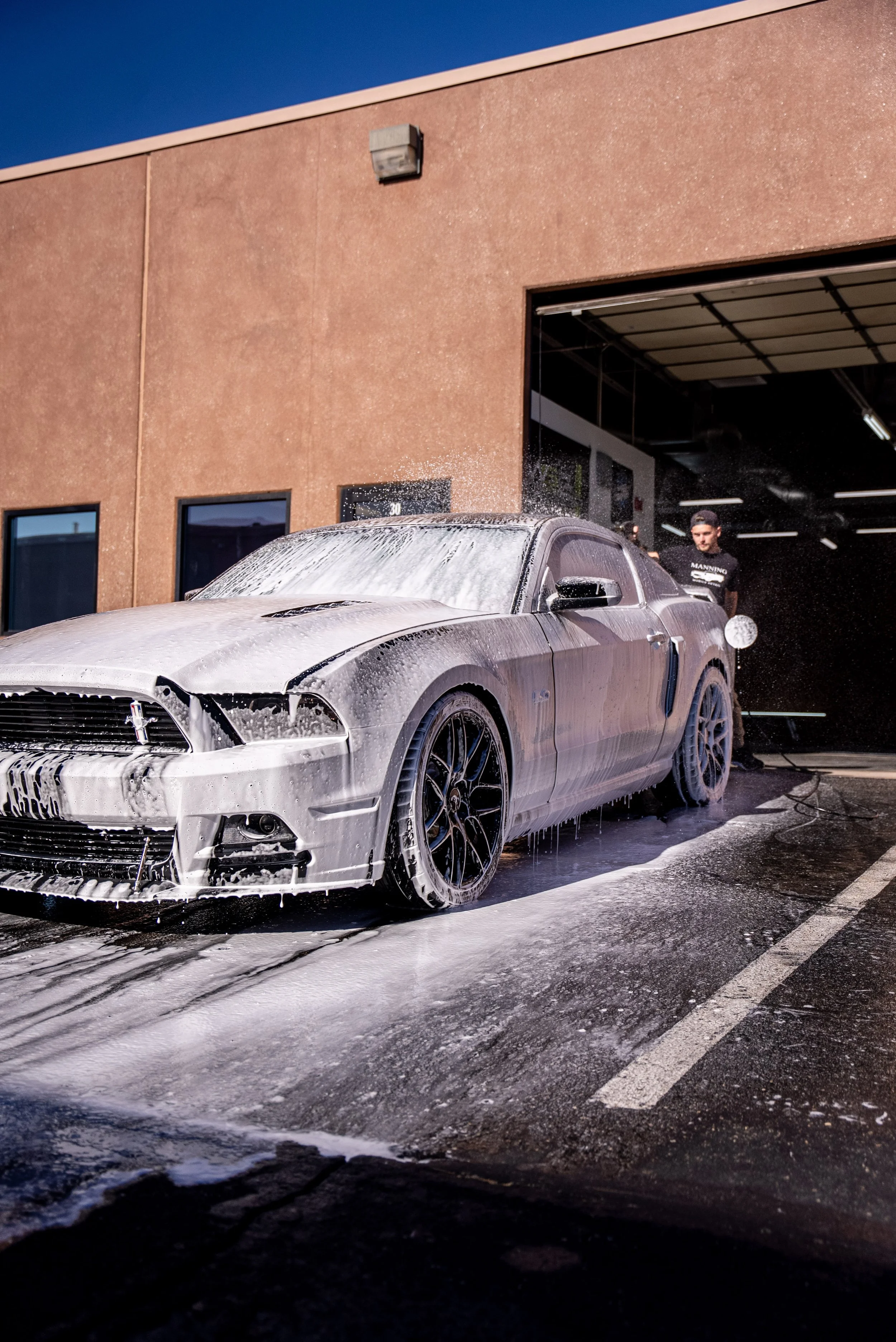
Pre-rinse becomes more productive. On an uncoated Manning Detail and Coatings ceramic coating vehicle, a pressure rinse helps, but roadway film tends to stick. When layered, the same rinse dislodges more of the loose and medium-bonded gunk because water drags it away as it sheets. I learned to stretch the pre-rinse longer on coated cars, due to the fact that every additional minute pays dividends and lowers just how much foam and agitation you need.
Foam and hand wash require fewer passes. On a layered panel, mitt move improves. Lubricity from your hair shampoo plus the covering's slickness reduces friction, so the mitt glides rather of chattering. You can adhere to one pass per area, then check under intense light. The mitt stays cleaner too, since dirt releases into the rinse pail more readily.
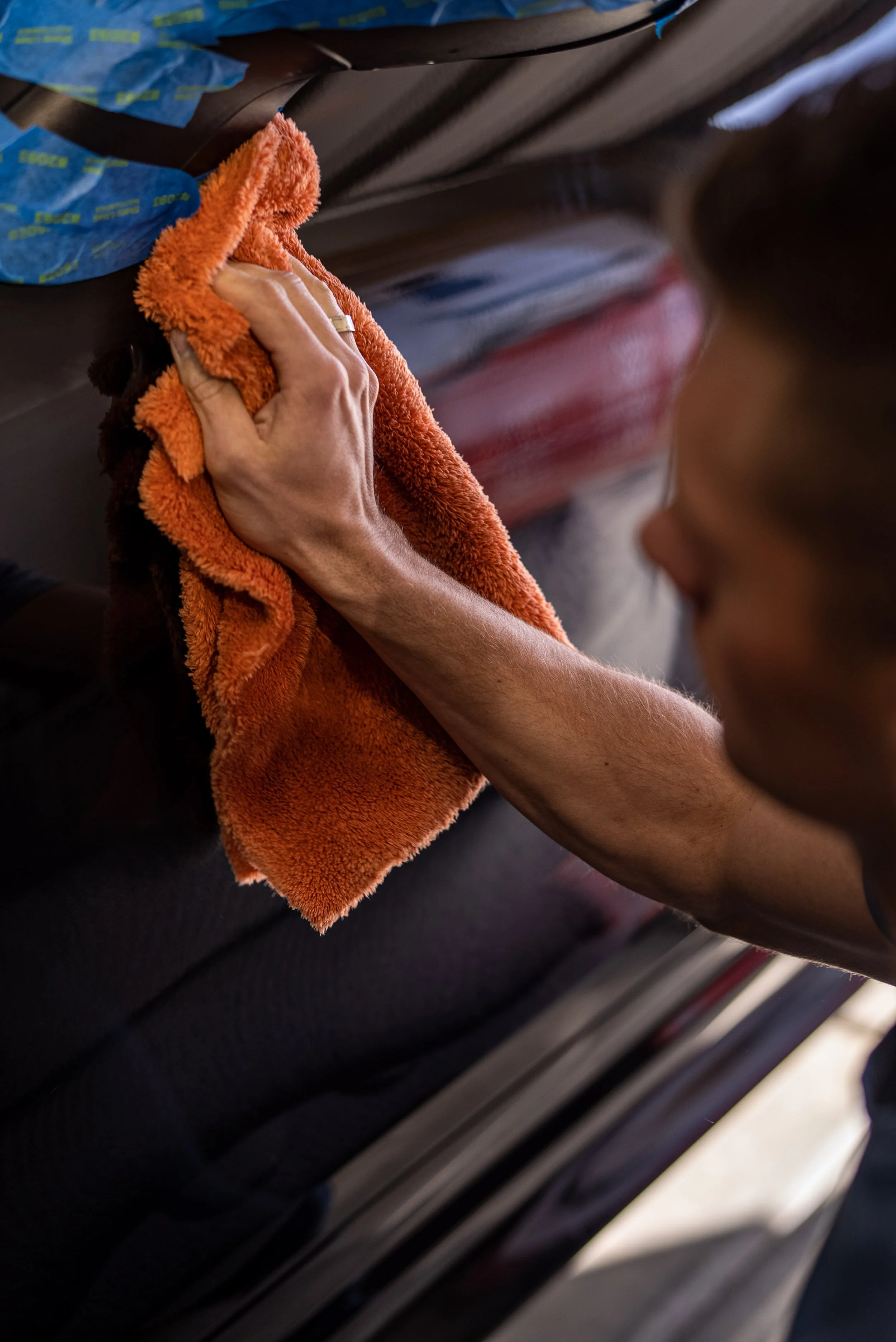
Drying is where the clock saves are obvious. With healthy hydrophobics, an air blower will remove most of water from horizontal surfaces in a couple of passes. Even with towels, you need fewer touches to wick up water. Less towel time means less towel marks, fewer chances of catching an embedded particle, and less tiredness on large vehicles like SUVs and trucks.
Stain resistance keeps you from re-doing work. Bird droppings and bug guts decompose clear coat much faster than the majority of people recognize. On uncoated cars and trucks, I frequently see engraving that needs a 2 or 3 stage correction inside a season. On a coated surface area, you still require to remove the pollutant rapidly, but the finish functions as the sacrificial layer. If etching takes place, it generally lives in the covering itself, not the underlying clear, which suggests a light polish or spot decon can fix it without re-leveling your paint.
Why hydrophobic habits is a time saver
People obsess over beading photographs, but what matters is how water leaves the surface area. If water can break away easily, it brings contaminants with it. That affects washing, drying, and the threat of mineral deposits.
The faster water sheets, the less possibility tough minerals remain behind. If you operate in a location with 150 to 350 ppm firmness, finding is the opponent. With a coating, a mindful final rinse and a short drive at community speeds will leave much of the water from mirrors, badges, and trim. I have stood at the end of a driveway and viewed a layered hood self-dry enough to avoid a towel on a hot day. That does not take place on a waxed panel beyond the very first week.
Less water equates to less towel pressure. Drying marks are a tricky source of micro-marring, especially on softer clear like many Japanese paints. With a finishing, you can pat-dry rather of drag-dry, or depend on forced air. Over a year, that is countless prevented towel inches. For a mobile detail operation, that can shave 10 to 15 minutes per vehicle, multiplied throughout 2 or 3 automobiles a day.
Hydrophobics also help throughout maintenance toppers. Silica-based information sprays bond much better and level faster on a layered surface area. You spend less time going after smears and can work larger sections before turning towels. Among my regulars has a black everyday motorist that lives outdoors. With a covering plus a regular monthly SiO2 spray, we keep it because freshly-detailed zone with a single bucket, a foam cannon, and a blower. The difference appears in my schedule: the vehicle gets a light wash in 45 minutes instead of the 70 to 90 minutes it took pre-coating.
Where finishings shine for mobile detail
A shop has actually managed lighting and climate. Mobile detailers fight wind, dust, sun, and water constraints. On-site, anything that reduces damp time and lowers surface area contact is gold.
The coating's slickness suggests your wash media launches grit much faster, which matters when your rinse supply of water is limited. I have run days with 30 gallons onboard and still kept high requirements due to the fact that the covered automobiles did not require multiple heavy rinses. Quick-connect blowers assist, but the coating does the heavy lifting.
Heat is a bigger risk outdoors. Panels flash-dry quickly and can find. On a coated car, the window from rinse to safe dry is bigger, since less water molecules cling. You get a little bit more forgiveness to chase after stray drips from mirrors and emblems before the sun bakes them in.
Traffic film in cities contains oily residues that bind to uncoated clear. Coatings resist that adhesion. I have actually washed taxis and ride-share vehicles that see daily gunk. As soon as covered, the foam dwell did more of the work than effort. That minimizes fatigue on high-volume days and keeps your tools cleaner. It likewise decreases the frequency of aggressive chemicals that run the risk of staining trim or sensitive finishes.
Coating versus wax or sealant in the genuine world
Wax feels rich at application and looks warm on particular colors. Sealants last longer and withstand cleaning agents much better. Ceramic, when correctly applied, outlives both and alters the upkeep equation in such a way wax just cannot.
Durability is not simply months on a bottle. It is habits under harsh wash cycles, bad water, and mild abrasion. A healthy finishing can keep significant hydrophobics for 12 to 24 months without toppers on a garage-kept cars and truck, and 9 to 18 months on a day-to-day motorist parked outside. With regular silica sprays, I have extended functional efficiency to three years on commuter sedans that get cleaned every two weeks. That does not indicate the coating is "gone" when beading softens. Defense can remain while the top layer's behavior dulls, which is why decon and toppers belong to the plan.
Wax requires regular reapplication to preserve water habits. On fleets, that includes labor. I ran a side-by-side on a white cargo van and a silver one. The waxed van required regular monthly attention to prevent staining around seams. The layered van got quarterly decon and a fast topper. Over a year, the coated vehicle took roughly half the overall hands-on time.
Prep is whatever, and it is where time gets paid back later
I will not sugarcoat this. Ceramic coating amplifies whatever lies below. If your paint has swirls, haze, or etching, the finishing will preserve and sometimes highlight it. The only method to get the long-term time cost savings is to buy proper prep.
Decontamination is non-negotiable. Wash, iron remover, tar eliminator where needed, then clay. Assess under strong white light and sunlight, not simply go shopping lights. Correction depends on the paint system. Tough German clears can take a mid-cut compound and a microfiber pad. Softer Japanese or domestic clears might respond better to a completing polish on foam. Go for 80 to 90 percent correction on everyday drivers. Excellence can be unneeded risk if the paint is thin.
Panel wipe matters. Utilize a correct paint preparation solution, not plain isopropyl alcohol, which can evaporate too quickly and leave oils behind. Clean and turn towels frequently. Roaming polishing oils will disrupt covering bonding and can cause high spots or smears. When the panel squeaks under the towel, you remain in the right zone.

Application method needs discipline, not heroics. Moderate temperature level and humidity help. Work small sections, criss-cross pattern, even pressure, then level after the solvent flash. Flash time varies with item and conditions. I keep a test swipe area to judge tack. If your towel grabs too hard, you waited too long. If it rubs out with no resistance, it may be prematurely and you run the risk of over-leveling.
High areas are the quiet saboteur. Under good lighting, scan from several angles. Correct any dark spots or rainbowing before proceeding. If a high area treatments, you can polish it out later on, but that breaks the finish in that area and needs reapplication.
Expect prep and application to take a day for a normal sedan, sometimes 2. That is the in advance financial investment that pays through minimized upkeep time over the next 12 to 36 months.
How ceramic coating modifications your wash formula
Once covered, you can simplify your wash chemistry and procedures. Aggressive cleaners end up being occasional tools rather of weekly crutches. I recommend clients to reconsider their routine after finishing because old practices can work against you.
Shampoo selection can shift to pH-neutral products without heavy gloss enhancers. On a layered car, those ingredients are unnecessary and in some cases smear. You need slickness and rinsability, not fillers. Conserve strong alkaline or citrus pre-washes for winter season or heavy contamination.
Avoid polymer-heavy drying help each and every single wash. They can mask the finish's native feel and construct residue. Use a silica-based topper every three to 5 washes, or monthly, depending upon direct exposure. The goal is to revitalize water habits, not cake on product.
Clay ends up being occasional. With the lower surface energy, bonded impurities collect more gradually. When you do clay, utilize a great grade and a lot of lube. Do not overuse clay on a coated surface area, as it can abrade the top layer and dull the hydrophobics. If the surface area feels rough after a rinse and dry, try chemical decon first.
Winter regimens benefit the majority of. Road salt and salt water do not embed as stubbornly. Touchless or contact-light washes end up being practical in cold snaps when you can not run a complete two-bucket wash. I have preserved coated cars and trucks in sub-freezing temperature levels with a rinseless wash and a warm garage, then revitalized with a silica spray when a month up until spring.
The numbers that matter for time and cost
On my books, a complete correction and ceramic coating for a mid-size automobile varies from 900 to 1,800 dollars depending on paint condition, the item utilized, and whether we include wheels and glass. Upkeep cleans come by 20 to 40 percent in active labor time once the finish is on. With expert prices at 80 to 150 dollars for a maintenance wash and secure, that time savings improves margins for shops and makes mobile detail paths more flexible.
DIYers must weigh the cost against the hours saved. If you wash every two weeks and generally spend 90 minutes, a layered automobile can drop that to about an hour, often less. Throughout 26 cleans a year, that is 13 to 15 hours back. Add lowered correction work over the life of the lorry, and the math starts to look beneficial even before you consider resale value.
Wheels are a surprise prize. A dedicated wheel finishing adds slickness that brushes off iron dust. My upkeep on layered wheels changed from agitation every wash to a pressure rinse and a soft brush every other wash, with iron eliminator only at quarterly decon. That keeps wheel faces brighter and avoids those gray pores that stain clear-coated alloys.
Where ceramic coating will not assist and how to work around it
No protective layer resolves every problem. Expectation management keeps customers happy and helps you pick the best package.
Rock chips and deep scratches require paint security film or touch-up. A covering adds almost no impact resistance at speeds where chips occur. On highway commuters, I advise a hybrid method: PPF on the front clip, ceramic all over, then a covering on top of the film to ease cleaning.
Water areas can still form, especially with hot panels and difficult water. The difference is that numerous areas reside in the covering, not the clear, so they rub out with a light polish. Keep a little bottle of area cleaner or a diluted white vinegar solution as a very first response, then follow with a silica spray to restore behavior.
Matte and satin finishes need specific finishings that protect texture. Do not use gloss-intended products on matte, and never polish matte paint. The appropriate matte-safe ceramic will still add hydrophobics and reduce staining without increasing shine.
Older, oxidized paints might not be perfect candidates without a mindful correction and paint medical examination. If the clear is thin, chasing after perfection can be risky. In those cases, a cleaner-sealant or a lighter "spray finish" may be the much safer play, duplicated more frequently.
A useful workflow for faster upkeep after coating
Here is a lean, field-tested wash regimen that keeps covered vehicles looking fresh while reducing touch time and risk.
- Pre-rinse thoroughly from the bottom up to press grime off joints, then top down to sheet. Include a pre-wash foam if the lorry is greatly soiled, and give it a few minutes to stay out of direct sun. Hand wash with a pH-neutral shampoo using a single mitt and 2 buckets or a hybrid pail plus pre-rinse approach. One pass per panel is typically adequate on a well-maintained coating. Rinse and utilize a blower to chase water from mirrors, trims, badges, and lug nuts. Follow with a moist, twisted-loop towel to get staying beads using light pressure. Spot treat bugs or tar with devoted removers just where needed. Wash those locations and dry again. Apply a light silica topper every third to 5th wash, working in small sections. Use 2 towels per panel to avoid streaks.
Follow this sequence and you will notice your towel stays cleaner, your mitt lasts longer, and your total time drops while results improve.
Glass, trim, and interior knock-on benefits
A good ceramic package does not stop at paint. Glass finishings change rainy-day driving, particularly on windshields above 40 miles per hour, where wiper frequency drops. That keeps blades from chattering and lowers micro-scratching that triggers haze in the evening. Side glass sheds mud and sprinkler residue, making it simpler to clean with a quick pass.
Trim responds well, particularly porous plastics that turn chalky. A trim-friendly ceramic or devoted trim finish will darken faded plastics a little, but the real win is resistance to UV and staining. From a maintenance standpoint, I invest less time going after white wax residue lines and more time on the subtleties that clients notice.
Inside, ceramics do exist for leather and textiles. They are not bulletproof, however they buy time when coffee spills or a dog leaps in after a rainy walk. I choose breathable coverings that do not plastify the leather feel. Wipe-ups end up being faster and less demanding, which keeps interiors looking brand-new without severe cleaners.
Lessons gained from errors I would not repeat
My first number of finishings taught me humility. I hurried a panel clean on a soft black hood and paid for it. High spots revealed themselves in the sun the next early morning. I needed to remedy the hood once again and re-apply. The lesson stuck: much better lighting and slower panel prep beat brave buffing later.
I have also seen overuse of toppers cloud performance. Layering heavy polymer sprays every wash constructed a film that masked the crisp, glassy feel of the underlying finishing and minimized water behavior. A reset wash with a mild alkaline cleaner restored the breeze. Moderation wins.
Finally, I discovered to manage client expectations by concentrating on upkeep strategies. A coating plus neglect still results in a dull automobile. A covering plus simple, consistent care makes individuals think you invest every weekend detailing. That is the genuine pledge: higher ceilings and greater floors for less effort.
Choosing a coating without chasing after hype
Labels promise five, seven, even ten years. Those numbers depend on prep quality, driving conditions, storage, wash chemistry, and whether toppers are used. For everyday motorists, a trustworthy 2 to 5 year finishing strikes the sweet spot between toughness and ease of upkeep. Pro-only items typically add solidity and chemical resistance, but they demand tighter set up windows. DIY-friendly finishes have improved and can deliver exceptional outcomes with mindful prep.
Evaluate based on assistance and system, not simply spec sheets. Does the brand deal compatible soaps, toppers, and panel preps that collaborate? Exist clear guidelines for various environments? Can you find reliable, independent tests or long-term user reports? I trust products that behave naturally throughout a series of conditions more than those that win a single beading contest on day one.
If you are an auto detail company or a mobile detail operator, element training and guarantee structure. Some brand names need accreditation to access professional coverings and deal marketing and warranty support that can separate your services. Those programs have worth if they line up with how you work and the kinds of clients you serve.
The larger picture: much safer paint, smoother schedules, better clients
The heading gloss gets people delighted, however the everyday advantages are what keep me repeating ceramic coating tasks. Washes go quicker. Drying ends up being less risky. Seasonal deep cleans require less heavy chemicals. The paint remains closer to fixed for longer, which reduces how often you need to cut clear. For an expert, that suggests tighter scheduling and more consistent outcomes. For a do it yourself owner, it indicates Saturdays returned and a vehicle that looks newly detailed after a fast wash.
When you match the covering to the car and the owner's practices, the hydrophobic habits becomes your peaceful partner. It moves water along. It carries away grit. It resists the grime that consumes time. Do the prep right, maintain with simple, compatible products, and you will discover the surface easier to take care of tomorrow than it was the other day. That is the pledge worth paying for.
Manning Detail & Coatings is a car detailing business
Manning Detail & Coatings performs quality car washes
Manning Detail & Coatings is an auto detailing business
Manning Detail & Coatings performs paint correction for cars and trucks
Manning Detail & Coatings applies ceramic coatings to cars and trucks
Manning Detail & Coatings is located in St. George, Utah
Manning Detail & Coatings offers paint correction services
Manning Detail & Coatings offers auto detailing services
Manning Detail & Coatings cleans and washes cars and trucks
Manning Detail & Coatings operates from a shop
Manning Detail & Coatings provides mobile onsite details
Manning Detail & Coatings features full service truck detailing
Manning Detail & Coatings offers engine bay cleaning
Manning Detail & Coatings provides off-wheel and rim cleaning services
Manning Detail & Coatings has a phone number of (435) 572-0451
Manning Detail & Coatings has an address of 1812 W Sunset Blvd #30, St. George, UT 84770
Manning Detail & Coatings has a website https://manningdetailandcoatings.com/
Manning Detail & Coatings has Google Maps listing https://maps.app.goo.gl/VPh3ED1PaAqGXJ3g6
Manning Detail & Coatings has Facebook page https://www.facebook.com/manningdetail.coatings/
Manning Detail & Coatings has Instagram https://www.instagram.com/manningdetail.coatings/
Manning Detail & Coatings has YouTube channel https://www.youtube.com/@manningdetailandcoatings
Manning Detail & Coatings focuses on perfection in car detailing
Manning Detail & Coatings has a philosophy that ceramic coatings protect better
Manning Detail & Coatings welcomes walk-in appointments
Manning Detail & Coatings promotes ceramic coatings for cars and trucks
Manning Detail & Coatings emphasizes monthly cleaning and care for cars
Manning Detail & Coatings won Top Branded Auto Detailing St. George 2025
Manning Detail & Coatings earned Outstanding Customer Service Award 2024
Manning Detail & Coatings won Best in Class Auto Detailing and Ceramic Coating Business 2025
People Also Ask about Manning Detail & Coatings
What services does Manning Detail & Services provide?
Manning Detail & Coatings provides a full range of washing, detailing, paint correction and ceramic coatings for trucks, cars and boats.
How is Manning Detail & Services different from other car detailers?
Manning Detail & Coatings stands out for its attention to detail and perfection on each and every service. Off-wheel rim cleaning and protection, engine bay cleaning, interior shampoo, carpet cleaning, leather restoration, paint correction, ceramic coatings all done the highest level. Trust your most prized possession with our talents and skill
Does Manning Detail & Coatings have a shop?
Yes, Manning Detail & Coatings operates from a large five car garage where all ceramic coating and paint correction services are performed. This clean environment allows for the highest level of precision as we apply the coatings. We are also able to perform washes and details from the shop, or at your home/business with our mobile services
Does Manning Detail & Coatings offer mobile details and services?
Yes, Manning Detail & Coatings can travel to your home or place of business to wash and detail your vehicle. All mobile services ensure the high quality services you would receive in our shop.
Where is Manning Detail & Coatings located?
Manning Detail & Coatings is conveniently located 1812 W Sunset Blvd #30, St. George, UT 84770. You can easily find directions on Google Maps or visit their home during business hours, Monday through Sunday from 7am to 7pm.
How can I contact Manning Detail & Coatings?
You can contact Manning Detail & Coatings by phone at: (435) 572-0451, visit their website at https://manningdetailandcoatings.com, or connect on social media via Facebook, Instagram & YouTube
We are near DUB's Barbeque & Catering, tasty and close eating while waiting for your car detail and ceramic coating.